
"mara lago"
shiv and gun, brast Steve and Adam's ...

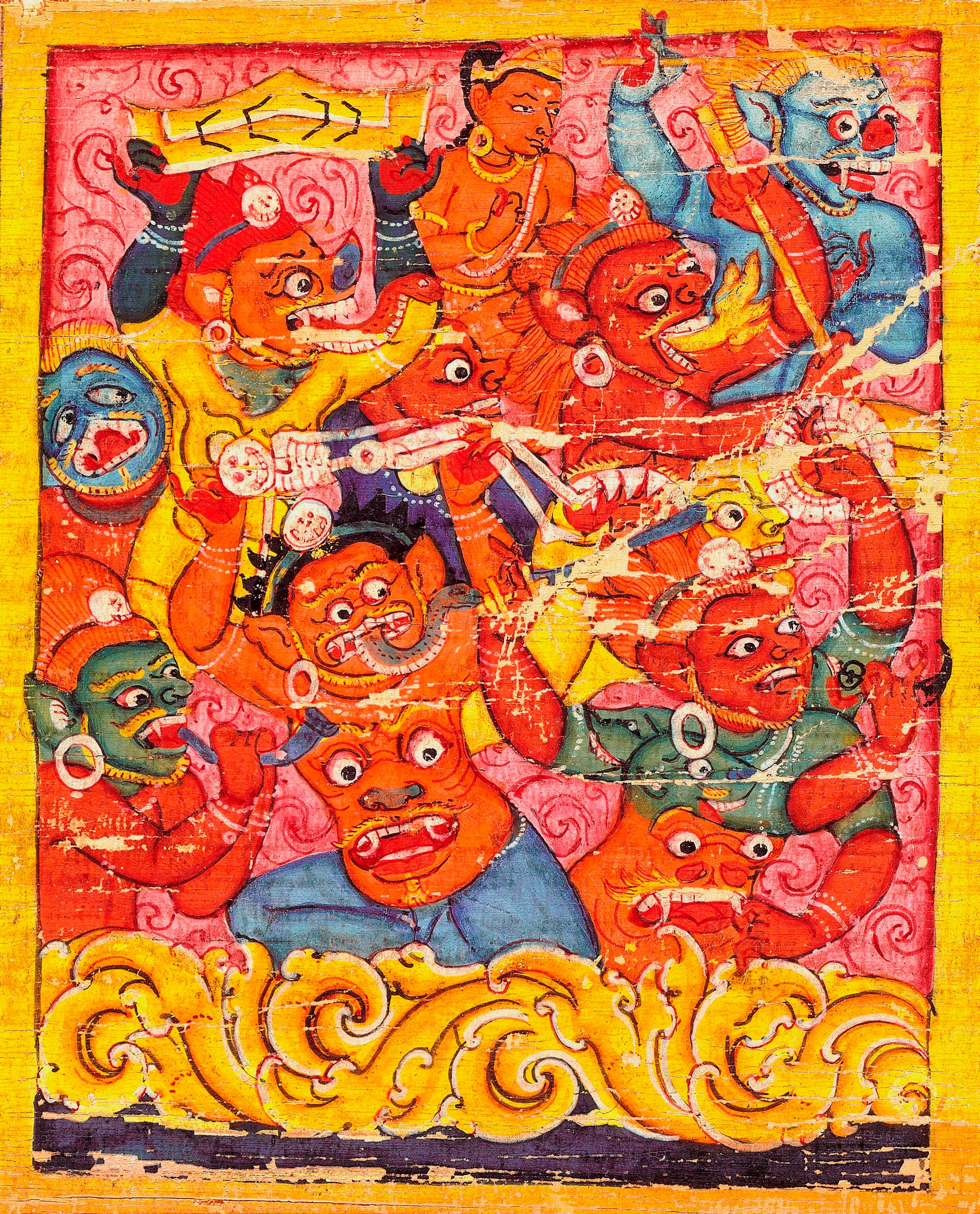
Say what you will about Jeffrey “Didn’t Kill Himself” Epstein, and, yeah, no, yeah, say what you will, I’ll wait.
While you’re vituperating into thin air, I’ll tease a future screed in which I — at lower conceptual density (but, accordingly — and this is just math[s] — at greater length) than that of the gnomic telegraphy (and do we have to explain that vanished tech to the kiddiewinks yet?) ordinarily serving in this my sandbox as the medium of finger-scrawled discourse — unpack the one notion at the suppurating core of the current government of sociopaths that’s amenable of construction (albeit inconclusively) as non-racist, a top favorite of the generality’s dimmest commerçants, to wit: “Government should be run more like business.” Which “business” is — DID YOU KNOW? — constituted of enterprises that are virtually all of them autocracies: dictatorships with boards! And of whose big-genius practitioners no puny contingent would seem to have been very ready to be taken, first, in, and, subsequently (often enough), to the cleaners by the celebratedly charming and credentials-lite ephebo. (Assuming they weren’t also doing … uh … well … you know … okay, you get it: that.) Which “business” mere exposure to, let alone engagement in, almost without exception transmutes, at all scales, the moral plasm of the most honest and least competitive of humans by degrees into nothing less trivially debased than that of a puffer, a sharper, a carny barker, and in the worst cases into something as nihilistically bad as that of the CEO of and holder of the controlling interest in a private-equity fund.
Adam Smith wrote that the worst governor is a merchant. It will be quibbled that he did so in the context of colonial entities; I will quibble back that everything is a colony of imperial capitalism now, so the aperçu is applicable. TL;DR bypass — and this is just science: install business government, get all Epstein all the time. Is what I’m saying. But I digress.
To revert to what I was on about before I so cavalierly interrupted myself: say what you will about Epstein, but you can’t fault him for affecting to be above the demos when it comes to spelling (most egregiously of proper names) and punctuation. Witness this:
“ … [I]n January 2019, Epstein emailed author [Michael] Wolff to scoff at the notion Trump never knew about any underage girls:
“[VICTIM] mara lago. [Redacted sentence]. Trump said he asked me to resign, never a member or ever. . of course he knew about the girls as he asked ghislaine to stop”
“mara lago”
Now this, the Tathagata delivering himself of his origin story in Flaubert’s Tentation de Saint Antoine, via D.F. Hannigan’s by turns exasperatingly and endearingly woolly English rendering:
“There only remained for me to be tempted by the Devil.
“I invoked him.
“His sons came — hideous, covered with scales, nauseous as charcoal, howling, hissing, bellowing, flinging at each other armour and dead men’s bones. Some of them spirted out flames through their nostrils; others spread around darkness with their wings; others carried chaplets of fingers that had been cut off; others drank the venom of serpents out of the hollows of their hands. They have the heads of pigs, rhinoceroses, or toads — all kinds of figures calculated to inspire respect or terror.”
The Devil. Or, as he’s known in this particular Indic-matrix soteriological narrative … Mara.
Again: “mara lago”. A pair of hyphens and a space carelessly elided (just forget the blown-up init caps), and the Post Toasties heiress’s capacious but oh-so-tatty stucco mansion assumes the style of Satan’s Sump, the paludalanimous demesne of the Satrap of Samsara, the MC of Maya.
So many thanks, dead pervert: insensibly, certes, but not the less definitively for that, you in your communication to the infuriatingly signifying hack Wolff plied the armature of pun, malaprop, semiotic side-eye, misconstruction, et al. that I have elsewhere denominated “the azoth of the Joycean” and, melting Florida Spanish down into hagiographical Pali, for me for ever and ay attached to Trump’s Sunshine State trash palace the veriest mana-conferring handle, it at once hidden in plain sight and as hedged from disclosure as “Rumpelstiltskin”, that could ever conceivably have been settled on it.
And thus through imparting to language power autonomous but purposeless, ramifying but unconscious, do even monsters advance the career of consciousness. Work upon that now. ·IO·SATVRNALIA·
[The representation of Mara’s retinue is taken from an 11th-c. CE Nepalese manuscript of the Aṣṭasāhasrikā Prajñāpāramitā Sūtra in LACMA’s Nasli and Alice Heeramaneck Collection.]
“Podhoretz’s ‘Problem’: Morality and the Monad”: 1930-2025
Sirened in to read a review of a current London production of J.M. Synge’s 1907 The Playboy of the Western World by (I will not lie) a huge-tracts-of-land-forward lead photo of Nicola Coughlan in the role of Mayo tapstress Pegeen Mike, I was moved to betake myself to my 1967 Avon paperback (bought new for 50¢ then; dark of paper and fragile of spine now) to revisit the play for probably the first time since 1972 at the latest.
Containing both the drama in question and Riders to the Sea, the edition is also kitted out with a slender but not paltry chunk of critical apparatus, three pivotal analyses by Yeats taking pride of place among the proffered array of interpretive sallies. But at the juncture at which I was accessing the volume, I to my surprise clocked that one entry had by grossest coincidence just attained to a nonce valence of the noteworthy, its author — a Great Depression red-diaper baby turned Nixon-era neocon, he thence on a heading continually starboard — having died in the interval between my taking in the Guardian assessment and my fetching the Synge down from my shelves.
“Synge’s Playboy: Morality and the Hero” had originally seen the light of day in 1953 in the Oxford journal Essays in Criticism — it my coætanean, founded only two years before the then-23-year-old Norman Podhoretz published the take therein. It’s a slight effort in both length (not that that determines anything in itself) and conceit, some standard midcentury archetypalizing blather unobjectionable enough in the terms of such things, and dutifully enough schematized with respect to that ensemble of conventions, but betraying on the part of the tyro critic no especial vatic phataphata in the exegetic department. I will submit that literary-critical writing was deprived of little when he was lost first to the Cold War draft (God only knows what addled peri-Bircher stuff he might have osmotically internalized during his two-year stint with the ASA) and then, in 1960, to politics and the editorship of Commentary. Given the Avon edition’s vintage (so to speak!!11!), one imagines Podhoretz’s wan walkabout in the mythic made the cut by reason of that eminence, the visibility it afforded him discomfitingly revealing him and his policy notions a bit more each time he wrote, each piece by degrees dragging the rag that started out respectably left-liberal (if sturdily Zionist and altogether too enthusiastically anticommunist) towards the rationales of the Bronze Age. He was, in the year of the Summer of Love, buzzy.
Alas, for no good reasons; and for none worse than this: exactly a decade after fuzzily puzzling out the Protean psychoethical evolution of Synge’s parricide-lite Christy Mahon, he shat the bed entire in the estimation of all but the most tortured progressives with his essay “My Negro Problem — and Ours”, one long whine of windowless solipsist grievance nursed from his childhood, a ghastly parody of Augustinian confessional candor that would never have seen print had he been possessed of any human friends worthy of either the adjective or the noun (he seems to have been so odious that I can scarce conceive that he did) who could have induced him to stay whatever ill judgement recommended loosing the vile thing. (His subsequent development of the trope of the liberal jilted so ferociously by the New Left that he had no choice but to metamorphose into not only a conservative, but a bellicose one, too, marks him out as a prodromos of our epoch’s edgy because intellectually underresourced and, in the main, conceptually feckless media bro who, ratioed or otherwise mass-castigated for some impropriety in the strain of punching down on or otherwise molesting any the white-cis-hetero matrix assign the status of The Other, pivots with puerile predictability out of apoliticism into the welcoming cilia of MAGA, amidst which languidly-waving poison tubes profit may be made and revenge had.) The rant was scarcely the sort of thing one comes back from all the way, but by then he didn’t want to, or so it would seem.
A couple of days after Podhoretz was translated, Wonkette’s Erik Loomis repelledly expectorated (et non sine causa!) a frothing and detail-crammed denunciation of the man, and you who might want many more reasons to loathe a fella when he’s dead (I am one such who mostly rejects the saw post mortem cessat invidia) are urged to click through to wallow in the catharsis. Against that backstopping censure I’ll close — in something like charity? — by reproducing the last sentences in the ’53 essay — what may have numbered among the last unsullied earnests of the red-diaper baby’s early allegiance to the socialist and feminist ideals, however imperfectly modelled and misshapenly realized, that animated his immediate forebears and, up to the point they didn’t any more, him:
The tragic implications of The Playboy of the Western World are that the type represented by Pegeen — those who can perceive greatness but cannot rise to it, who are weighed down by the “society” within them — can neither live in the lonesome west playing out their days, nor be happy in the little world of daily preoccupations. The Christies [sic] are somehow taken care of, and so are the Shawns [the topos of the sort of Pegeen’s dull affianced]; it is the Pegeens who suffer most from the radical incompatibility of Hero and society.
Yijingle Bells: Hiemal Solstice ’25
I report without weighting (much) that the same hexagram, Jing, has come up as the change three times (20.vi.24, 20/21.vi.25, and today) within the last eighteen months, and arisen each time out of a different present-situation substrate. As if repeated assaults with weaponized novelty on some reserve of civic, collective sentiment were iteratedly proving unable to inflect the target decisively. Huh.
Furthermore: Daguo has in some substantial measure broken my siege against even the most primally deep-culture gendering in Yijing through the integrality of the formal symmetry between the second line’s completely, baldly procreative slant (“shoots”) and the elegiac tenor (“flowers”) of the fifth’s, which, rarely, seems to adduce a parity, and one observed with the ghost of some affection, in desire in its axial manifestations male/female : gerontic/hebemorphic, howsobeit within a less than equitable frame as regards the woman. Thus, to rectify (ahem) the balances upset by the lights of my presumptuous and thoroughgoingly dastardly woke accounting, I have been obliged to resort to naked editorializing. Canon Legge would approve of none of it.
In Statu Quo

Daguo/Preponderance of the Great
suggests to us a beam that is weak. There will be advantage in moving in any direction whatever; there will be success.
The bipartite first shows one placing white mats of bai mao gen under things set on the ground. There will be no error.
The unitary second shows a decayed willow producing shoots, or an old husband in possession of a young wife. It is to be imputed from this that there will be advantage in every way.
The unitary third shows a beam that is weak. There will be evil.
The unitary fourth shows a beam curving upwards. There will be good fortune. To look to other will give cause for regret.
The unitary fifth shows a decayed willow producing flowers, or an old wife in possession of her young husband. It is supposed there will be occasion neither for blame nor for praise.
The bipartite sixth shows its subject striding extraordinarily through a stream, till the water hides the crown of that one’s head. There will be evil, but no ground for blame.
Mutatio

Jing/The Well
figures how a town may be changed, while its wells undergo no change, never disappear and never receive increase. And those who come and those who go can draw and enjoy the benefit. That nearly accomplished but — before the rope has quite reached the water — the bucket broken: this is evil.
The bipartite first shows a well so muddy that none will drink of it; or an old well to which neither birds nor et cætera resort.
The unitary second shows a well from which by a hole the water escapes and flows away to the shrimps, or one the water of which leaks away from a broken basket.
The unitary third shows a well cleared out but not used. Our hearts are sorry for this, for the water might be drawn out and used. If the ruler were intelligent, all might receive the benefit of it.
The bipartite fourth shows a well, the lining of which is well laid. There will be no error.
The unitary fifth shows a clear, limpid well, its cold spring drunk from.
The bipartite sixth shows the well welling to the top, which is not allowed to be covered. This suggests the idea of sincerity. There will be great good fortune.